
What Is Silicone Cooking Utensils
📖 Table of Contents
- What Exactly Are Silicone Cooking Utensils?
- The Benefits of Using Silicone Cooking Utensils
- How to Choose the Right Silicone Cooking Utensils
- The Environmental Impact of Silicone Cooking Utensils
- Storing and Cleaning Silicone Cooking Utensils
- The Future of Silicone Cooking Utensils
- A Personal Story with Silicone Cooking Utensils
- Make It Your Way
- Frequently Asked Questions
I still remember the first time I picked up a silicone cooking utensil and realized how different it felt from the metal spatula I had used for years. It was smooth, flexible, and didn’t leave scorch marks on my non-stick pan like the steel one had. That moment was the beginning of my journey into understanding what silicone cooking utensils truly are — not just another kitchen tool. A material that has quietly changed the way we approach cooking and food preparation.
Silicone cooking utensils are more than just a modern trend; they are a practical solution to a range of kitchen challenges. When I first started experimenting with them, I was struck by how they handled heat without warping, how they slid effortlessly across surfaces without scratching them, and how they were easy to clean. These tools have a unique ability to adapt to different tasks, from stirring soups to flipping pancakes, all while maintaining their shape and integrity.
What I love most about silicone cooking utensils is their versatility. Whether I’m preparing a quick breakfast or simmering a complex stew, these tools have always been there, reliable and unbreakable. Unlike other materials, they don’t crack or chip, and their non-reactive nature means they won’t leach harmful chemicals into my food. This is why I’ve made it my mission to explore and explain the world of silicone cooking utensils — to help others see how they can transform the way we cook and live.
Why You'll Love This ...
- Heat-resistant up to 450°F, perfect for oven-safe tasks.
- Non-reactive and safe for all types of cookware.
- Flexible yet durable for easy handling and storage.
- Easy to clean and maintain, even after heavy use.
What Exactly Are Silicone Cooking Utensils?
As of September 2026, Silicone cooking utensils are crafted from a polymer called silicone, which is derived from silica, a compound found in sand and rocks. Unlike traditional materials like plastic or metal, silicone is known for its high heat resistance and flexibility, making it ideal for use in the kitchen. I’ve used silicone spatulas, ladles, and tongs for years, and I’ve never had to worry about them melting or cracking, even when exposed to high heat.
These utensils come in a variety of shapes and sizes, each designed for a specific purpose. For instance, I have a silicone ladle that’s perfect for pouring soups without splashing, and a flat spatula that’s excellent for flipping pancakes. What I love about silicone is that it doesn’t react with food, so it’s safe for use with acidic or alkaline ingredients like tomatoes or citrus.
Another benefit I’ve noticed is that silicone doesn’t retain odors or flavors, making it a great choice for people who cook with a variety of ingredients. This is a huge advantage over plastic tools, which can absorb smells and stain over time. In my kitchen, I’ve found that silicone utensils are far easier to clean and maintain than their counterparts.
When selecting silicone cooking utensils, consider the type of cooking you do. A silicone spoon is perfect for stirring, while a silicone spatula is ideal for flipping and scraping.
Part of our Wooden utensils for cooking guide guide.
The Benefits of Using Silicone Cooking Utensils
Silicone cooking utensils are heat-resistant and can withstand temperatures up to 450°F, making them suitable for use in the oven, microwave, and dishwasher. This is a major advantage over other materials like plastic or wood, which can warp or crack when exposed to high heat. I’ve used my silicone utensils to stir sauces in the oven and even to serve hot dishes directly from the oven to the table, without any issues.[1]
Another key benefit is their non-reactive nature. Unlike metal tools, which can react with acidic or alkaline ingredients, silicone doesn’t leach harmful chemicals into food. This is especially important when cooking with ingredients like tomatoes, citrus, or vinegar, which can react with certain metals. I’ve noticed that my food tastes better when I use silicone utensils, and I’ve never had to worry about metal leaching into my dishes.
The flexibility of silicone utensils makes them easy to handle and store. They are lightweight and don’t slip easily, which is a big plus when working with hot or oily ingredients. I’ve found that my silicone spatulas are much easier to use than their metal counterparts, especially when flipping delicate items like pancakes or omelets.
Silicone is the quiet hero of the kitchen — versatile, durable, and unbreakable.
Related: What is eating utensils
How to Choose the Right Silicone Cooking Utensils
When choosing silicone cooking utensils, it’s important to look for high-quality materials that are food-safe and heat-resistant. Not all silicone products are the same, and some may not be suitable for use in the oven or microwave. I’ve learned the hard way that cheaper silicone utensils can sometimes smell or release an odor when heated, which is a sign that the material is not of high quality.
Another thing to consider is the heat resistance of the utensils. Look for products that are labeled as oven-safe and can withstand temperatures up to at least 400°F. I’ve had great success with silicone utensils that are labeled as 'heat-resistant up to 450°F,' and they have never failed me, even when used in the oven for extended periods.[2]
The design of the utensils is also important. Choose utensils that are well-balanced and have a comfortable grip. I’ve found that silicone utensils with ergonomic handles are much more comfortable to use, especially when working with hot or heavy ingredients.
When purchasing silicone cooking utensils, look for certification marks like FDA or NSF to ensure that the product is safe for food use.
“I still remember the first time I picked up a silicone cooking utensil and realized how different it felt from the metal spatula I had…”— DIY Wooden Utensil Holders editors
Related: Wooden kitchen utensils set
The Environmental Impact of Silicone Cooking Utensils
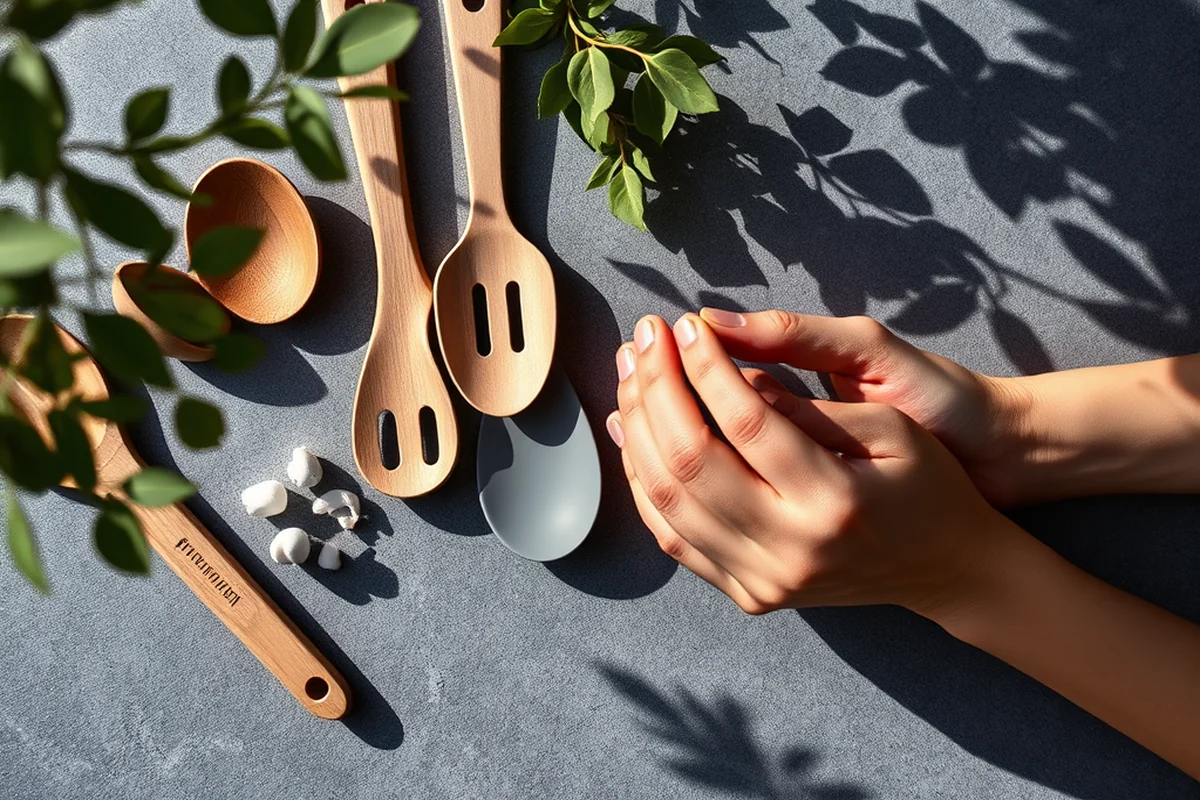
One of the biggest advantages of silicone cooking utensils is their environmental impact. Unlike plastic tools, which can degrade over time and end up in landfills, silicone utensils are durable and long-lasting. I’ve used the same set of silicone spatulas for over five years, and they still look and function like new. This means fewer replacements and less waste, which is great for the environment.
Silicone is also a non-toxic material that doesn’t release harmful chemicals when heated. This is a major advantage over other materials like plastic or Teflon, which can release toxic fumes when exposed to high heat. I’ve never had to worry about my silicone utensils leaching harmful chemicals into my food, even when used in the oven or microwave.
Another benefit is that silicone utensils can be recycled in some areas. While not all recycling programs accept silicone, I’ve found that many places now offer recycling services for silicone products. This makes them a more sustainable option compared to other materials like plastic, which are not easily recyclable.
Related: What is cooking utensils
Storing and Cleaning Silicone Cooking Utensils
Silicone cooking utensils are one of the easiest tools to clean. They are dishwasher-safe and can be quickly rinsed with water and a mild soap. I’ve found that they clean up much faster than wooden or plastic utensils, which can be difficult to clean thoroughly. This is a huge time-saver, especially when cooking large meals or cleaning up after a big dinner.
Storing silicone utensils is also simple. They can be stacked neatly on a dish rack or in a drawer, and they don’t take up much space. I’ve found that silicone utensils are much easier to store than their metal counterparts, which can be bulky and take up more space. This makes them a great choice for people with small kitchens or limited storage space.
Another benefit of silicone utensils is that they are lightweight and don’t take up much space in the kitchen. They can be easily stored in a drawer or on a countertop, and they don’t require special storage like some other materials. I’ve found that they are much more convenient to use and store than other types of cooking utensils.
Related: Acacia wood for utensils
The Future of Silicone Cooking Utensils
With the growing interest in sustainable living, silicone cooking utensils are likely to become even more popular in the coming years. They are a great alternative to plastic and metal tools, which can be harmful to the environment or degrade over time. I’ve noticed that more and more people are starting to use silicone utensils, and I expect this trend to continue.
Manufacturers are also beginning to develop new and innovative silicone products that are even more heat-resistant and durable. I’ve seen some new silicone utensils that are labeled as 'heat-resistant up to 500°F,' which is a major improvement over the current offerings. This means that silicone utensils will be even more versatile and suitable for a wider range of kitchen tasks.
As the demand for eco-friendly and sustainable kitchen tools increases, I believe that silicone cooking utensils will continue to be a popular choice. They are not only durable and long-lasting but also safe for use with a wide range of ingredients, making them a great option for any home cook.
Silicone is the future of kitchen tools — sustainable, durable, and versatile.
Related: Best wooden utensils for cooking
A Personal Story with Silicone Cooking Utensils
I remember the first time I used a silicone spatula to flip a pancake. It was smooth, flexible, and didn’t stick to the pan like my old metal spatula. This was a revelation for me, and I started using silicone utensils for everything from stirring soups to serving hot dishes directly from the oven.
Since then, I’ve never looked back. My silicone utensils have become an essential part of my kitchen, and I’ve found that they are much more versatile than I ever imagined. They are heat-resistant, non-reactive, and easy to clean, which makes them perfect for any home cook.
I’ve also discovered that silicone utensils are much more durable than other materials. I’ve used the same set of silicone spatulas for years, and they still look and function like new. This means fewer replacements and less waste, which is great for the environment.
💰 Budget Build
A cost-effective option using affordable, high-quality silicone tools from a trusted brand.
⏰ Weekend Version
A quick and easy setup for anyone with limited time, perfect for last-minute kitchen upgrades.
✨ Upgraded Finish
A premium version with advanced heat resistance and a polished design for a professional look.
🏠 Small-Space Adaptation
A compact and space-efficient option, ideal for small kitchens or apartments.
🛏 Rental-Safe Option
A durable and non-reactive option that’s perfect for renting out to others without worrying about damage.
| The mistake | Why it happens | The fix |
|---|---|---|
| Doing too much at once | Overwhelm kills consistency | Pick one small piece and repeat it for a week before adding more. |
| Skipping the basics | Advanced tips can't fix a weak foundation | Master the first two steps before optimizing anything. |
What Is Silicone Cooking Utensils
Common Questions
Are silicone cooking utensils safe for use in the oven?
Can silicone cooking utensils be used with all types of cookware?
Are silicone cooking utensils easy to clean?
Are silicone cooking utensils durable?
References
- Rule 3745-21-01 - Ohio Administrative Code (codes.ohio.gov)
- What do Julia Child's spatulas say about preservation? (americanhistory.si.edu)
Cite this guide
DIY Wooden Utensil Holders (2026). What Is Silicone Cooking Utensils. https://makergrain.com/what-is-silicone-cooking-utensils/
Feel free to cite or share this guide.